Hydraulic ramp or lift vs. manual ramp: Which one is right for a modified pickup truck?
By TSN Accesibilidad · 20 October 2026

When adapting a vehicle to transport a person who uses a wheelchair, one of the most important decisions is choosing the right accessibility system. There are several solutions available, including manual ramps and hydraulic lifts, each with features suited to different mobility needs, vehicle types, and usage frequency.
But which option is best? The answer depends on factors such as vehicle height, available space, wheelchair type, and how transfers will be carried out. In this article, we explain the main differences to help you make an informed decision.
How Does a Manual Wheelchair Ramp Work?
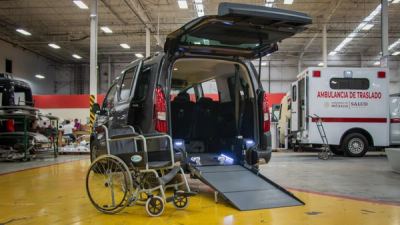
A manual ramp is an inclined surface that allows a wheelchair to enter or exit a vehicle without having to lift it. It typically features a folding or hinged mechanism that allows the ramp to be deployed when needed and stored after use. Its main advantage is its simple operation, as it does not require a hydraulic system.
When Is a Manual Ramp the Right Choice?
A manual ramp can be a good option for private vehicles, assisted transportation services, or vehicles with enough space to deploy a ramp at an appropriate angle. However, it is important to consider that using a ramp may require physical effort, especially when the person uses a heavy wheelchair, the vehicle has a high floor, or assistance is needed to get in and out.
For this reason, the vehicle's specifications and users' needs should be evaluated before installation.
How Does a Hydraulic Wheelchair Lift Work?
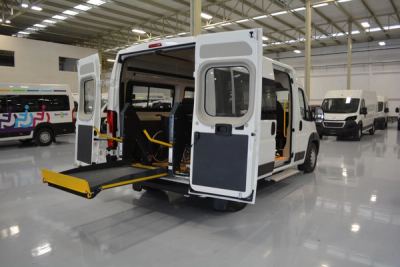
Unlike a manual ramp, a hydraulic lift uses a powered lifting mechanism to move a platform between ground level and the vehicle floor. The person can remain in their wheelchair while the platform moves, provided the equipment's operating instructions and capacity limits are followed. This solution helps reduce the physical effort required during boarding and exiting.
When Is a Hydraulic Lift the Right Choice?
A hydraulic lift is worth considering when a vehicle handles frequent transfers, when the entry height makes a conventional ramp difficult to use, or when reducing the physical effort required from caregivers and staff is a priority.
Installation requires an assessment of the vehicle's dimensions. This solution may be suitable for institutional transportation vehicles, specialized mobility services, and fleets dedicated to transporting people with disabilities.
Hydraulic vs. Manual Wheelchair Ramps: Key Differences
| Feature | Elevador hidráulico | Manual Ramp |
|---|---|---|
| Operation | Assisted lifting using a platform | Manual deployment of an inclined surface |
| Physical Effort | Reduces the effort required for lifting | May require assistance when boarding |
| Maintenance | Requires inspection of the hydraulic mechanism and its components | Generally simpler |
| Space Requirements | Requires space for the platform and mechanism. Ideal for large vans. | Requires sufficient length and space for deployment |
| Compatibility | Depends on the vehicle's structure and load capacity | Depends mainly on vehicle height, ramp slope, and dimensions |
5 Factors to Consider Before Choosing
1. Vehicle Type and Entry Height
Not all vans have the same entry height. In vehicles with higher floors, a manual ramp may need to be longer to maintain an appropriate incline. In these cases, a lift may be a more practical option.
2. Wheelchair Type
Manual wheelchairs can differ in size and weight from powered wheelchairs. It is important to consider the combined weight of the person and their wheelchair, as well as the space needed to maneuver safely during entry and exit.
3. Frequency of Transfers
A vehicle used for multiple trips each day has different requirements from one used occasionally. For frequent transportation, reducing physical effort and making boarding and exiting easier can be particularly important.
4. Available Operating Space
The chosen solution must be practical to use at the locations where passengers typically board and exit the vehicle.
It is essential to check whether there is enough space to deploy the ramp or platform and to assess the ground conditions and surrounding environment.
5. Safety During Transportation
Accessibility does not end once the person enters the vehicle.
It is also important to consider wheelchair securement systems, occupant restraints, and an appropriate interior layout.
These elements are part of a comprehensive accessible transportation solution.
We can assess vehicle adaptation projects across different vehicle platforms, for both private use and transportation services or institutional fleets.
Explore our wheelchair ramp solutions.